> For the complete documentation index, see [llms.txt](https://docs.writitude.com/llms.txt). Markdown versions of documentation pages are available by appending `.md` to page URLs; this page is available as [Markdown](https://docs.writitude.com/tone-of-voice-analyzer.md).
# Tone of voice Analyzer
Initially created for internal use by our team to develop Writitude's pre-configured tone and style guides, Analyzer calculates the characteristics of your sample text.
Analyzer provides invaluable insights into parameters that influence a text's tone.
Analyzer highlights features that often go unnoticed but contribute to the unique feel of each text. These include:
* Use of complex words (those with four, five, or six syllables)
* Use of discriminatory and informal language
* Use of rare words
* Use of superlatives
* Most frequently used words in the text
* Emotions conveyed in the text
To analyze your text:
1. Choose a text that you would like to analyze. Make sure it is at least a few paragraphs long, or consists of a few shorter texts of the same tone combined.
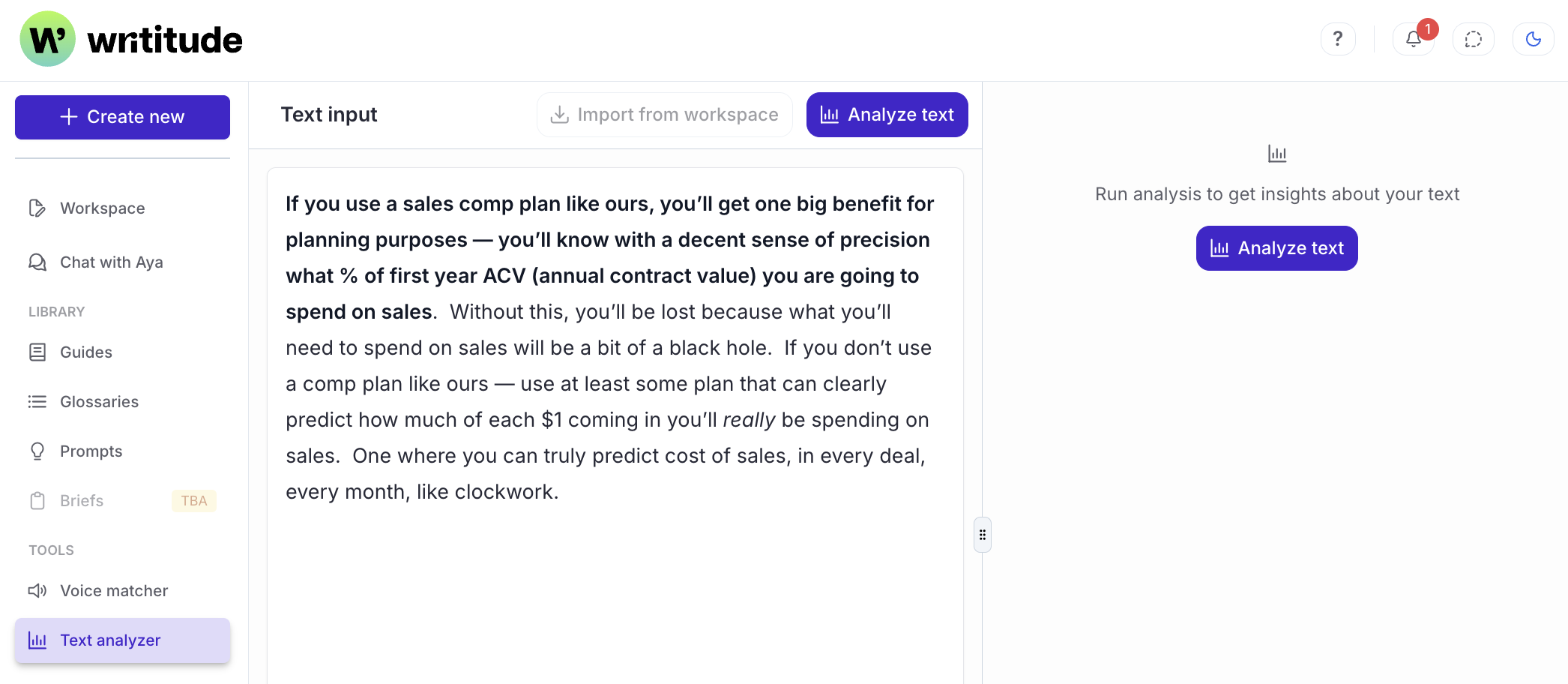
2. Go to the "Text Analyzer," as shown below.
Analyzer in Writitude can be found in the Tool section
3\. Use the insights from Analyzer to generate ideas for new rules to add to your custom tone of voice. The Analyzer will help you think about your text in a way you may never have considered before.
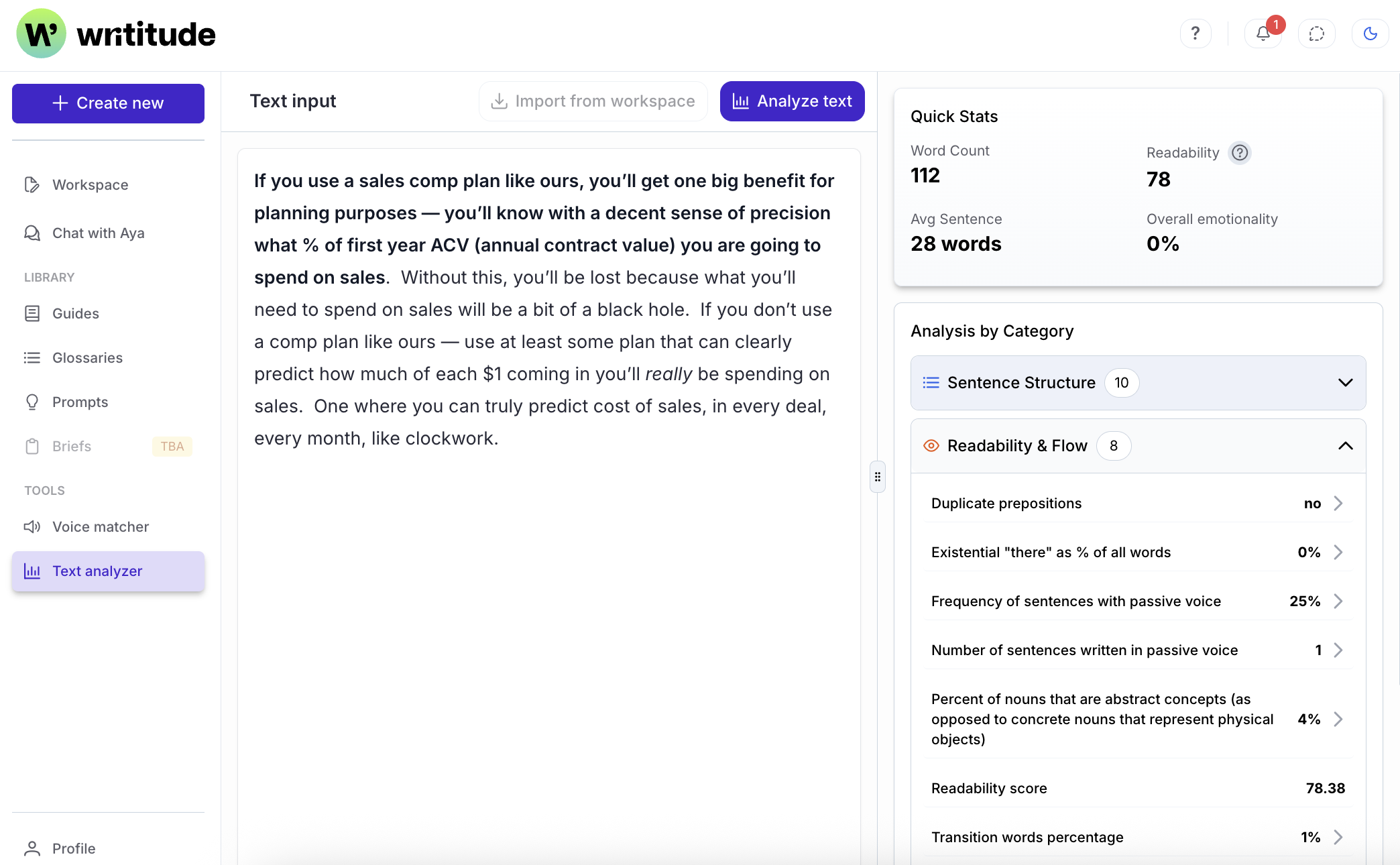
Text analysis results in Writitude — in the right panel of Analyzer
For example, to set the correct percentage for the use of rare or complex words, or to control the use of superlatives in the tone-of-voice editor, you can use the information provided by Analyzer.
Click on any result to read a detailed explanation of that parameter...
Rule description in Analyzer
.. and add the related tone rules to any custom tone of voice guide (yes, it has to be created beforehand).
Adding a rule to a custom writing guide
If you have a question or a comment, feel free to drop us an email at [support@writitude.com](mailto:support@textok.com).